

Choosing a business entity does more than define legal structure—it directly shapes how taxes are paid throughout the year. A sole proprietor pays estimated taxes on all business income, while an LLC or S-Corp may reduce or shift quarterly obligations through pass-through taxation or payroll requirements. Understanding these differences helps avoid surprises and keeps cash flow under control.
Each structure carries its own method for calculating and submitting quarterly payments. Sole proprietors often handle self-employment tax on top of income tax, LLCs may vary depending on tax classification, and S-Corps typically require owners to run payroll and pay themselves a reasonable salary. These rules influence not only how much is owed but also how often and in what form payments must be made.
The choice of entity influences efficiency, compliance, and long-term financial planning. By comparing how each option affects quarterly tax obligations, business owners can align their structure with their financial goals and reduce unnecessary complexity.
Key Takeaways
- Entity type changes how quarterly taxes are calculated and paid
- Each structure has different filing and payment requirements
- Choosing the right entity can improve tax efficiency and planning
Overview of Business Entity Types
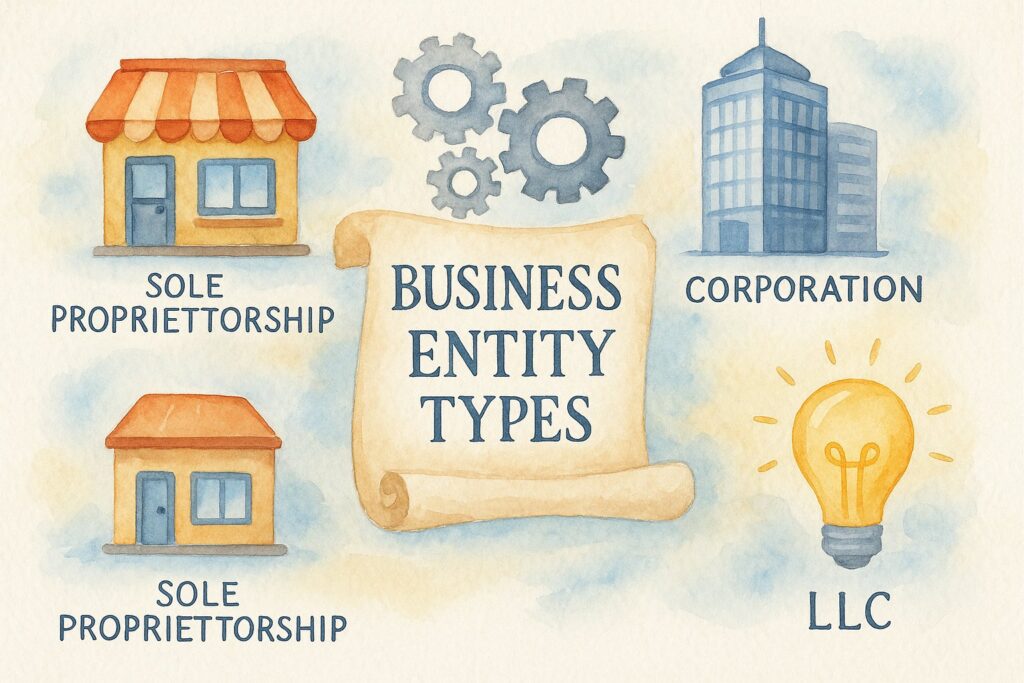
Each business structure affects how income is reported, how taxes are paid, and the level of recordkeeping required. Liability protection, administrative complexity, and eligibility for certain tax treatments also differ depending on the entity type.
Sole Proprietorship Explained
A sole proprietorship is the simplest business form. It does not create a separate legal entity, so the owner reports all profits and losses on their personal tax return using Schedule C (Form 1040). Quarterly estimated taxes typically include both income tax and self-employment tax.
This structure offers minimal administrative requirements. There is no separate corporate filing, and setup costs are low. However, the owner assumes unlimited personal liability, which means personal assets can be at risk if the business incurs debt or legal claims.
From a tax perspective, income is subject to self-employment tax rates, which cover Social Security and Medicare. Deductions for business expenses are allowed, but there is no distinction between personal and business liability. This makes tax compliance straightforward but can increase overall tax burdens compared to other structures.
LLC Structure and Features
A Limited Liability Company (LLC) combines liability protection with flexible tax treatment. By default, a single-member LLC is taxed like a sole proprietorship, while a multi-member LLC is taxed as a partnership. Both require owners to pay quarterly estimated taxes based on their share of profits.
Unlike a sole proprietorship, an LLC shields personal assets from business debts and lawsuits. This separation is a key advantage for owners seeking legal protection. Administrative requirements are higher than a sole proprietorship but generally less complex than a corporation.
An LLC can also elect to be taxed as an S-Corp or C-Corp by filing with the IRS. This election can change how self-employment taxes apply and potentially reduce the owner’s tax liability. The choice depends on income level, payroll considerations, and long-term business goals.
Understanding S-Corp Status
An S-Corporation is not a separate entity type but a tax status that eligible corporations or LLCs can elect. It allows profits and losses to pass through to shareholders, avoiding double taxation at the corporate level. Owners must file Form 1120-S and issue Schedule K-1 to report individual income.
Quarterly obligations differ from a sole proprietorship or standard LLC. Owners who work in the business must receive a reasonable salary, subject to payroll taxes. Remaining profits are distributed as dividends, which are not subject to self-employment tax. This structure can reduce overall tax liability if managed properly.
S-Corp status comes with stricter compliance rules. Businesses must maintain formal records, hold shareholder meetings, and file additional forms with the IRS. Only U.S. citizens or residents can be shareholders, and the number of shareholders is limited to 100. These restrictions make S-Corps more structured but potentially more tax-efficient.
Quarterly Tax Obligations by Entity Type

Quarterly tax responsibilities differ by business structure because each entity type is taxed and reported in a distinct way. The main differences involve how income is reported, how self-employment or payroll taxes are handled, and whether payments are made directly by the owner or through the business.
Sole Proprietor Quarterly Tax Requirements
A sole proprietor reports all business income and expenses on Schedule C of their personal tax return. Since no taxes are withheld from business income, they must make estimated quarterly tax payments. These payments cover federal income tax and self-employment tax, which includes both Social Security and Medicare contributions.
The IRS generally requires payments in April, June, September, and January. If the individual expects to owe at least $1,000 in taxes for the year, they must make these estimated payments. Failure to pay on time can result in penalties and interest.
Sole proprietors often use Form 1040-ES to calculate and submit their payments. Keeping accurate records of income and deductible expenses throughout the year is critical to avoid underpayment.
LLC Member Tax Responsibilities
The quarterly tax obligations of an LLC depend on whether it is taxed as a disregarded entity, partnership, or corporation. By default, a single-member LLC is treated like a sole proprietorship, meaning the owner pays quarterly estimated taxes for both income and self-employment tax.
For multi-member LLCs taxed as partnerships, each member receives a Schedule K-1 showing their share of income. Members then make their own quarterly estimated payments based on that allocation. Like sole proprietors, they use Form 1040-ES to calculate obligations.
If an LLC elects corporate taxation, the business itself may be responsible for quarterly corporate tax payments. In this case, members only pay taxes on distributions or wages received, depending on the setup.
S-Corp Shareholder and Payroll Tax Duties
An S-Corp has different requirements because the business must run payroll for shareholder-employees. Wages paid to shareholders are subject to withholding of income tax, Social Security, and Medicare, which are submitted regularly through payroll filings rather than estimated tax vouchers.
Shareholders also receive distributions of profits, which are not subject to self-employment tax but may require estimated quarterly income tax payments if withholding from wages is insufficient. Each shareholder reports their share of profits on a Schedule K-1.
The S-Corp itself files Form 1120-S annually, but the responsibility for estimated tax payments generally shifts to the individual shareholders. Proper payroll management is essential to stay compliant and avoid penalties.
Comparing Tax Filing and Payment Processes
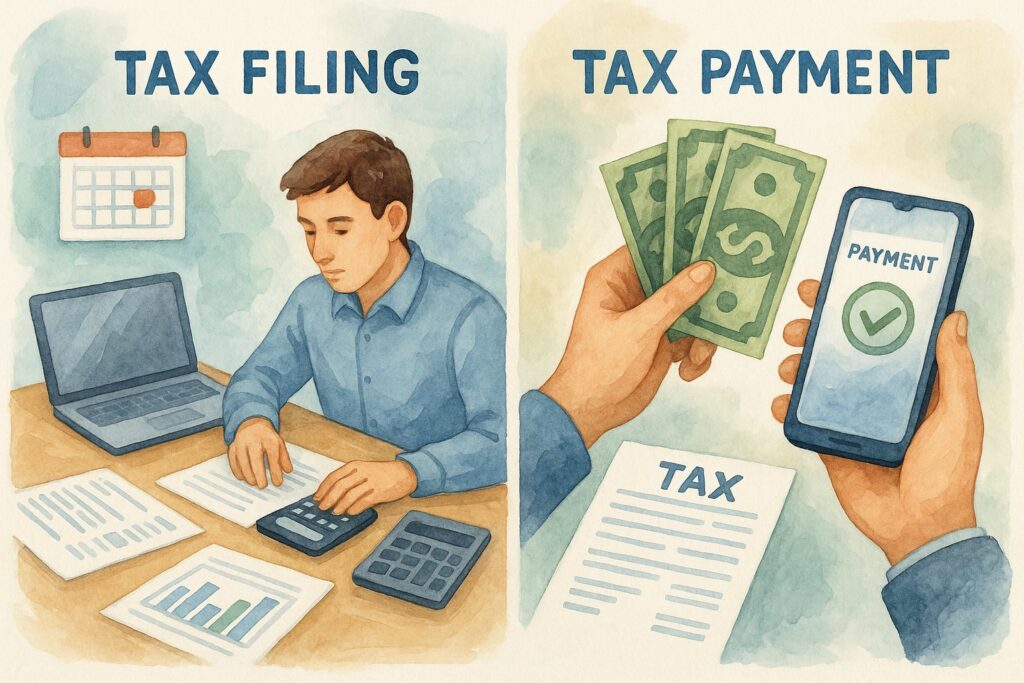
Quarterly tax responsibilities differ based on whether someone operates as a sole proprietor, an LLC owner, or an S-Corp shareholder. The main differences involve how estimated taxes are calculated, how self-employment taxes apply, and whether payroll systems must be used to handle compensation.
Estimated Tax Payments and Deadlines
Sole proprietors and single-member LLCs typically pay estimated taxes directly to the IRS four times a year. These payments cover both income tax and self-employment tax. The due dates usually fall in April, June, September, and January of the following year.
Multi-member LLCs taxed as partnerships follow a similar schedule. Each partner is responsible for their share of estimated taxes, based on the income reported on a Schedule K-1.
S-Corp shareholders must also make quarterly estimated payments, but the calculation differs. Since they receive wages through payroll and distributions separately, their estimates primarily cover tax on distributions and other non-wage income. Payroll withholding reduces the need for large quarterly payments.
Failing to pay enough throughout the year can trigger IRS penalties. Accurate recordkeeping and timely calculations help reduce the risk of underpayment.
Self-Employment Tax Implications
Sole proprietors and LLC members generally pay the full 15.3% self-employment tax on net earnings. This amount covers both Social Security and Medicare contributions. They can deduct half of this tax when calculating adjusted gross income, but the full liability still applies.
In contrast, S-Corp shareholders do not pay self-employment tax on distributions. Instead, they must take a “reasonable salary” subject to payroll taxes. Only the wage portion is taxed for Social Security and Medicare, while distributions avoid this layer of tax.
This creates a key difference in quarterly obligations. Sole proprietors must plan for both income and self-employment taxes in every payment. S-Corp owners, however, split obligations between payroll withholdings and estimated taxes, which can lower the effective self-employment burden if structured correctly.
Payroll and Withholding Considerations
Sole proprietors and most LLC owners do not run payroll for themselves. They simply withdraw profits, which are not subject to withholding. As a result, quarterly estimated payments remain the only way to cover federal tax obligations.
S-Corps operate differently. Shareholders who work in the business must be treated as employees and placed on payroll. This requires withholding federal income tax, Social Security, and Medicare taxes from each paycheck. The corporation also pays the employer share of payroll taxes.
Because wages are taxed through payroll, S-Corp owners often have smaller quarterly estimated tax payments. However, they must ensure compliance with payroll reporting, including Form 941 filings and timely deposits. This adds an administrative layer not present for sole proprietors or LLCs taxed as disregarded entities.
Choosing the Right Entity for Tax Efficiency
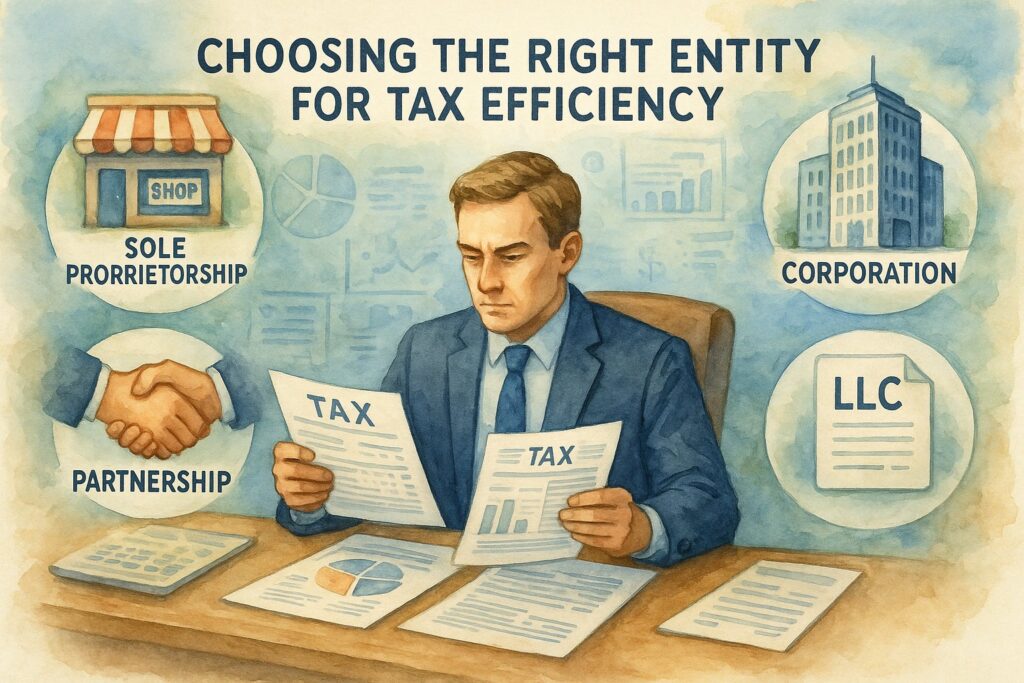
The way a business is structured shapes how income is taxed, how owners pay themselves, and what quarterly payments are required. Each entity type creates different opportunities for reducing self-employment taxes and planning for future growth.
Tax Planning Strategies by Entity Type
A sole proprietorship requires the owner to report all business income on their personal return. Quarterly estimated taxes cover both income tax and self-employment tax. This structure is simple but offers little flexibility in reducing tax burden.
An LLC taxed as a disregarded entity follows similar rules to a sole proprietorship. However, electing corporate taxation can change obligations. For example, an LLC electing S-Corp status allows owners to split income between salary (subject to payroll taxes) and distributions (not subject to self-employment tax).
An S-Corp provides the most planning options for reducing self-employment taxes. Owners must pay themselves a “reasonable salary,” but distributions beyond that salary avoid payroll taxes. This requires more recordkeeping, payroll filings, and compliance with IRS rules.
A C-Corp is less common for small businesses focused on minimizing quarterly tax payments. Profits are taxed at the corporate level, and dividends are taxed again to shareholders. While this can be efficient for retained earnings, it usually increases complexity for owners who withdraw profits regularly.
Long-Term Tax Impact of Entity Choice
Entity choice affects not only quarterly obligations but also how taxes accumulate over time. A sole proprietor pays self-employment tax on all net earnings, which can significantly reduce long-term take-home pay.
LLCs and S-Corps allow more flexibility in structuring income. An S-Corp, for instance, can lower lifetime self-employment taxes by shifting part of earnings into distributions. However, this strategy requires careful documentation to withstand IRS scrutiny.
C-Corps can benefit businesses planning to reinvest profits. The flat corporate tax rate may reduce overall liability if distributions are limited. Yet, double taxation on dividends makes this less attractive for owners who expect to draw regular income.
Retirement contributions also vary by entity. Sole proprietors and LLCs can contribute based on net income, while S-Corp owners calculate contributions on salary only. This difference influences long-term savings potential and should be factored into entity selection.
Frequently Asked Questions
Quarterly tax obligations vary depending on whether a business operates as a sole proprietorship, LLC, or S-Corp. The type of entity influences filing requirements, self-employment taxes, eligibility for deductions, and how income passes through to the owner’s personal return.
What are the primary differences in quarterly tax filings for sole proprietorships, LLCs, and S-Corps?
Sole proprietors file estimated taxes directly on their personal returns using Form 1040-ES.
Single-member LLCs usually follow the same process unless they elect corporate taxation. Multi-member LLCs file partnership returns but still pass income to members for estimated tax purposes.
S-Corps file corporate returns and owners pay estimated taxes on their share of income, often requiring both corporate filings and individual estimated payments.
How does the choice of business entity affect self-employment tax obligations?
Sole proprietors and most LLC members pay self-employment tax on net earnings, which covers Social Security and Medicare.
S-Corp shareholders who actively work in the business pay payroll taxes only on their wages, not on distributions, which can lower self-employment tax liability.
What are the deadlines for quarterly tax payments for different business structures?
The IRS sets the same deadlines for estimated taxes across all entities: April 15, June 15, September 15, and January 15 of the following year.
Regardless of entity type, individuals and pass-through owners must make estimated payments by these dates to avoid penalties.
Can you explain how pass-through taxation works for LLCs and S-Corps?
Pass-through taxation means the business itself does not pay federal income tax at the entity level. Instead, profits and losses flow to the owners’ personal tax returns.
LLCs and S-Corps both qualify, but S-Corps face stricter ownership and filing rules, while LLCs offer more flexibility in how they are taxed.
What are the penalties for failing to meet quarterly tax obligations for each business entity type?
The IRS charges penalties and interest for underpayment or late payment of estimated taxes, regardless of entity type.
Sole proprietors, LLC members, and S-Corp shareholders all face these penalties individually since their income typically flows through to their personal returns.
How do deductions and credits differ for sole proprietors, LLCs, and S-Corps when filing quarterly taxes?
Sole proprietors and LLCs generally deduct business expenses directly against income before calculating estimated taxes.
S-Corps can deduct wages paid to owners and employees at the corporate level, and distributions are not subject to self-employment tax. Credits apply to all entities but may be claimed differently depending on whether they reduce corporate or personal liability.
Need Tax Help? SUBMIT INQUIRY