

Healthcare practitioners have traditionally faced significant barriers when attempting to access alternative investment opportunities that could diversify their portfolios beyond traditional stocks and bonds. These investments—including private equity, private credit, real assets, and venture capital—have historically required substantial minimum investments and exclusive institutional connections that individual practitioners rarely possess.
The Healthcare Practitioners Private Markets Program (HPPMP) eliminates these traditional barriers by providing qualified and accredited medical professionals with direct access to curated alternative investment opportunities that were previously available only to large institutional investors. This specialized program recognizes that healthcare practitioners possess unique financial profiles and investment needs that differ from typical retail investors.
The private markets landscape has evolved considerably, with healthcare investing driven by demographic trends, technological innovation, and rising global demand for medical services. Your professional expertise in healthcare provides valuable context for evaluating these investment opportunities, positioning you to make informed decisions about private market investments that align with both your financial goals and industry knowledge.
Key Takeaways
- HPPMP provides healthcare practitioners exclusive access to private market investments typically reserved for institutional investors
- The program offers diversification through private equity, private credit, real assets, and venture capital opportunities
- Your medical expertise gives you unique advantages when evaluating healthcare-related alternative investments
Overview of the Healthcare Practitioners Private Markets Program

The Healthcare Practitioners Private Markets Program offers structured access to alternative investments through specific eligibility requirements and targeted benefits. The program focuses on providing qualified practitioners with institutional-quality investment opportunities typically reserved for large investors.
Program Structure and Objectives
The HPPMP operates as a curated investment platform that aggregates healthcare practitioners’ capital to access institutional-level alternative investments. The program structure allows individual practitioners to participate in deals typically requiring minimum investments of $1 million or more.
Primary Investment Categories:
- Private equity funds focusing on healthcare and technology sectors
- Private credit opportunities including direct lending and distressed debt
- Real assets such as commercial real estate and infrastructure projects
- Venture capital investments in early-stage healthcare companies
The program’s core objective centers on democratizing access to alternative investments for healthcare professionals. You gain exposure to asset classes that historically required significant minimum investments and institutional connections.
Investment minimums within the program typically start at $25,000 to $50,000 per opportunity. This structure enables broader participation while maintaining the quality of underlying investments.
The program conducts thorough due diligence on each investment opportunity before presentation to members. This screening process includes financial analysis, management team evaluation, and market opportunity assessment.
Eligibility Criteria for Qualified and Accredited Practitioners
You must meet specific professional and financial qualifications to participate in the HPPMP. The program requires active licensure as a healthcare practitioner, including physicians, dentists, veterinarians, and other licensed medical professionals.
Financial Requirements:
- Meet SEC accredited investor standards ($1 million net worth or $200,000 annual income)
- Maintain active professional liability insurance
- Demonstrate stable income history over the previous two years
Professional eligibility extends to practicing healthcare providers in good standing with their respective licensing boards. The program accepts applications from specialists across medical disciplines, including surgeons, internists, psychiatrists, and other medical specialists.
You must provide documentation of your professional status, including current medical license, board certifications, and professional references. Financial documentation includes recent tax returns, bank statements, and net worth verification.
The program also considers qualified purchasers under the Investment Company Act for certain opportunities. This designation requires $5 million in investable assets and opens access to additional investment structures.
Key Benefits for Healthcare Professionals
The program provides several distinct advantages tailored to healthcare practitioners’ unique financial situations and investment needs. You receive access to institutional-quality due diligence typically unavailable to individual investors.
Investment Access Benefits:
- Lower minimum investments compared to direct institutional access
- Professional investment committee oversight and selection
- Quarterly performance reporting and transparency
- Access to fund managers typically closed to new investors
The program offers flexible investment timing aligned with healthcare practitioners’ cash flow patterns. You can schedule investments around seasonal income variations common in medical practices.
Educational components include regular webinars on alternative investment strategies and market conditions. These sessions provide continuing education specifically designed for healthcare professionals transitioning into sophisticated investment strategies.
Administrative Advantages:
- Consolidated tax reporting across multiple investments
- Simplified subscription and documentation processes
- Dedicated investor relations support familiar with healthcare professionals’ schedules
- Online platform access for portfolio monitoring and reporting
The program’s fee structure offers transparency with no hidden charges beyond clearly disclosed management fees and carried interest on individual investments.
Alternative Investment Opportunities Within HPPMP

The HPPMP platform provides access to four distinct alternative investment categories that typically require institutional-level capital commitments. Each category offers unique risk-return profiles and portfolio diversification benefits specifically structured for healthcare practitioners.
Private Equity Access
Private equity investments within HPPMP focus on established companies with proven business models and revenue streams. You gain exposure to buyout funds, growth equity strategies, and sector-specific opportunities that target healthcare-adjacent businesses.
The program typically features funds with minimum commitments starting at $250,000. These investments offer potential returns of 12-20% annually over 5-7 year holding periods.
Key Investment Characteristics:
- Commitment periods: 3-5 years with capital calls
- Target returns: 15-25% IRR
- Liquidity: Limited until fund distributions begin
Healthcare-focused private equity opportunities include physician practice management platforms and medical device companies. These investments align with your industry knowledge while providing portfolio diversification.
Fund managers conduct extensive due diligence on portfolio companies before acquisition. You benefit from professional management without direct operational involvement in underlying businesses.
Private Credit Offerings
Private credit investments provide steady income streams through direct lending to middle-market companies. You access opportunities in senior debt, mezzanine financing, and specialty lending strategies.
These investments typically generate current income of 8-12% annually with lower volatility than equity markets. Credit investments often include protective covenants and collateral backing.
Available Credit Strategies:
- Direct lending funds
- Distressed debt opportunities
- Real estate credit investments
- Healthcare-specific lending
Minimum investments usually start at $100,000 with quarterly distribution schedules. The credit focus provides portfolio stability during market volatility while generating regular cash flow.
Many private credit opportunities target healthcare borrowers including medical practices, healthcare technology companies, and equipment financing. Your industry expertise helps evaluate these specialized lending opportunities.
Real Assets Inclusion
Real assets within HPPMP encompass real estate, infrastructure, and natural resources investments. These tangible assets provide inflation protection and portfolio diversification benefits.
Real estate investments include medical office buildings, senior housing, and healthcare facilities with long-term triple-net leases. Infrastructure opportunities focus on essential services and utilities.
Primary Real Asset Categories:
- Medical real estate (15-25 year leases)
- Senior housing facilities
- Healthcare infrastructure
- Natural resource investments
These investments typically require 5-10 year commitment periods with current yields of 6-10%. Real assets often appreciate with inflation while providing steady cash distributions.
Medical real estate investments leverage your understanding of healthcare facility requirements. Properties leased to healthcare operators offer stable income streams indexed to consumer price inflation.
Venture Capital Investments
Venture capital access through HPPMP targets early-stage companies in healthcare technology, medical devices, and biotechnology sectors. These investments offer significant upside potential with higher risk profiles.
You gain exposure to innovation in telemedicine, artificial intelligence in healthcare, and next-generation medical technologies. Venture investments typically require 7-10 year commitment periods.
Focus Areas Include:
- Digital health platforms
- Medical device innovation
- Biotechnology development
- Healthcare AI applications
Minimum commitments generally start at $200,000 with potential returns exceeding 25% annually for successful investments. However, venture capital carries substantial risk of total loss.
Your healthcare background provides valuable insight into emerging technologies and market adoption potential. This industry knowledge helps evaluate the commercial viability of healthcare venture investments.
How HPPMP Facilitates Direct Investment Access
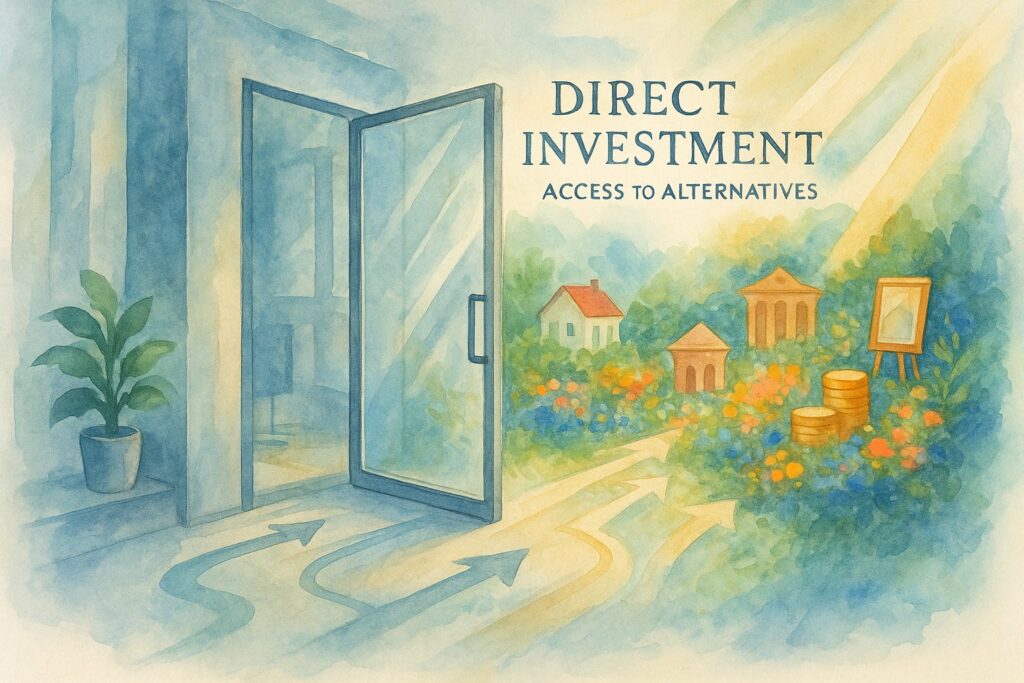
The Healthcare Practitioners Private Markets Program streamlines access through structured investment selection, systematic onboarding processes, and comprehensive risk oversight. These mechanisms eliminate traditional barriers that prevent individual practitioners from accessing institutional-quality alternative investments.
Investment Selection and Due Diligence
HPPMP employs a rigorous screening process to identify suitable private market opportunities. The program’s investment committee evaluates fund managers based on track record, strategy alignment, and operational capabilities.
Each potential investment undergoes comprehensive due diligence. This includes analysis of the fund manager’s historical performance, portfolio construction methodology, and risk management protocols.
Key evaluation criteria include:
- Minimum five-year track record
- Assets under management exceeding $500 million
- Transparent fee structures
- Demonstrated healthcare sector expertise
The program maintains relationships with established fund managers across multiple asset classes. This network provides access to investments typically requiring minimum commitments of $1-5 million.
Your investment options are pre-vetted through institutional-grade analysis. The program’s due diligence team reviews legal documentation, conducts manager interviews, and assesses operational infrastructure before presenting opportunities.
Onboarding and Participation Process
The onboarding process begins with verification of your accredited investor status. You must provide documentation demonstrating income exceeding $200,000 annually or net worth above $1 million.
Required documentation includes:
- Tax returns for the previous two years
- Bank statements and investment account records
- Professional license verification
- Signed investor qualification forms
Initial investment minimums typically range from $25,000 to $100,000 per opportunity. This represents significant reduction from direct institutional minimums.
The program utilizes a pooling structure that aggregates practitioner investments. This approach enables access to funds that would otherwise require substantially higher individual commitments.
Electronic signature platforms facilitate document execution. Investment confirmations and capital call notices are delivered through secure digital portals.
Risk Management and Compliance Practices
HPPMP implements multiple layers of risk oversight to protect participant interests. The program maintains compliance with SEC regulations governing private placement offerings.
Portfolio diversification guidelines limit concentration risk across asset classes and vintages. Maximum allocation limits prevent overexposure to single investments or strategies.
Risk management protocols include:
- Quarterly portfolio reviews
- Annual compliance audits
- Independent valuation verification
- Liquidity monitoring systems
The program provides detailed reporting on investment performance and portfolio composition. You receive quarterly statements detailing capital calls, distributions, and net asset values.
Professional liability insurance covers program operations and investment management activities. Third-party administrators handle custody and record-keeping functions to maintain operational independence.
Compliance monitoring ensures adherence to investment policy guidelines. The program maintains records of all investor communications and transaction documentation for regulatory review.
Frequently Asked Questions
Healthcare practitioners considering the HPPMP typically require clarification on program eligibility, investment access mechanisms, asset diversification options, capital requirements, regulatory compliance protocols, and emergency liquidity provisions.
What are the eligibility criteria for healthcare practitioners to participate in the HPPMP?
You must hold active licensure as a qualified healthcare practitioner to participate in the HPPMP. This includes physicians, dentists, veterinarians, pharmacists, and other licensed medical professionals.
You need to meet accredited investor status as defined by SEC regulations. This requires either $1 million in net worth excluding your primary residence or $200,000 in annual income for individuals ($300,000 for married couples).
Your professional standing must be in good standing with relevant licensing boards. The program conducts background verification through appropriate regulatory databases to confirm your professional credentials.
How do participants in the HPPMP gain access to alternative investment opportunities?
You receive curated investment opportunities through the program’s dedicated platform. The program’s investment committee screens and evaluates opportunities before presenting them to participants.
Investment access occurs through quarterly opportunity releases. You review investment materials, conduct due diligence, and make investment decisions within specified timeframes.
The program facilitates direct investment coordination with fund managers. You maintain direct relationships with underlying investment vehicles while benefiting from the program’s collective access and negotiated terms.
What types of alternative assets can practitioners expect to invest in through the HPPMP?
Private equity investments focus on healthcare services, medical technology, and pharmaceutical companies. These opportunities typically involve growth capital, buyouts, and expansion financing for healthcare businesses.
Private credit investments include healthcare real estate financing, medical equipment lending, and practice acquisition financing. These debt-based investments offer regular income distributions with healthcare sector focus.
Real assets encompass medical real estate, healthcare infrastructure, and specialized healthcare facilities. Venture capital opportunities target early-stage medical technology, digital health platforms, and innovative healthcare solutions.
What are the anticipated financial commitments required for healthcare practitioners to join the HPPMP?
Initial program membership requires a $50,000 minimum commitment. This commitment grants you access to the investment platform and quarterly opportunity presentations.
Individual investment minimums vary by opportunity type. Private equity investments typically require $25,000 to $100,000 minimum commitments per investment.
You can expect capital calls over 3-5 year investment periods. Most investments follow committed capital structures where you fund investments as capital calls are made by underlying fund managers.
How does the HPPMP ensure the compliance and regulatory standards for healthcare-focused investments?
The program maintains compliance through registered investment advisor oversight. All investment recommendations and materials comply with SEC regulations for accredited investor programs.
Legal documentation includes appropriate disclosures and risk assessments. You receive comprehensive offering materials that detail investment risks, fee structures, and regulatory considerations.
The program coordinates with qualified custodians for investment holdings. Third-party compliance monitoring ensures adherence to healthcare industry regulations and investment suitability standards.
Can participants of the HPPMP access their investment capital for emergency liquidity?
Most alternative investments through the HPPMP have limited liquidity during investment periods. Private equity and venture capital investments typically have 5-10 year holding periods with minimal early exit options.
Some investments offer partial liquidity through secondary markets. The program provides access to secondary market opportunities where you can sell positions to other qualified investors.
You should maintain separate emergency funds outside the HPPMP. The program recommends keeping liquid assets equivalent to 6-12 months of expenses separate from alternative investment commitments.
Interested? SUBMIT INQUIRY