

The private market secondaries industry has grown dramatically over the past decade. According to Evercore’s 2024 Secondary Market Survey, global secondary transaction volume reached approximately $120–130 billion in 2023, up from just $25 billion a decade earlier. Analysts expect the market to surpass $200 billion annually by 2027, driven by both institutional and retail demand.
Historically dominated by large institutional investors, the secondaries market is now expanding into retail and mass affluent channels through new funds, digital platforms, and tokenized investment structures.
Key Growth Drivers

a. Liquidity Needs in Private Markets
With over $13 trillion globally locked in private equity and venture funds, investors increasingly seek liquidity solutions before funds mature. The secondaries market allows them to monetize stakes early, especially in a high-rate environment where distributions have slowed.
b. GP-Led Transactions
A major shift has occurred from traditional LP-led sales (where limited partners sell their fund interests) to GP-led secondaries, where fund managers themselves structure liquidity events—such as continuation funds—to extend ownership of high-performing assets.
- In 2023, GP-led deals represented over 50% of total secondary volume, per Jefferies’ market report.
Retail Access and Platform Innovation

Digitalization is enabling fractional ownership and lower minimums. Platforms such as:
- Moonfare, CAIS, and iCapital allow qualified investors to access private equity and secondary offerings.
- Lex Markets and Yieldstreet are exploring tokenized secondary trading for private real estate and credit.
- AltsPRISM most recently, announced their launch of a platform dedicated to healthcare practitioners.
- Securitize and Figure are piloting blockchain-based secondary exchanges for private fund interests.
These innovations are democratizing liquidity, once reserved for institutions.
Portfolio Management Implications

a. Liquidity and Rebalancing
The secondaries market enables investors to actively manage exposure across vintage years, sectors, and geographies. For example, an investor overexposed to venture capital can sell part of their position and reallocate to infrastructure or buyout funds.
b. Pricing Efficiency
As transaction volumes rise, pricing transparency improves. Average discounts to net asset value (NAV) have narrowed from ~30% during 2020’s market stress to ~10–15% in 2024, depending on asset quality. This increased efficiency supports more accurate portfolio valuations.
c. Shorter Duration and De-Risking
Buying secondaries offers reduced J-curve effects and shorter time to liquidity, as the underlying assets are already partially realized. This makes them attractive for investors seeking mid-term cash flows rather than decade-long lockups.
Implications for Retail Investors
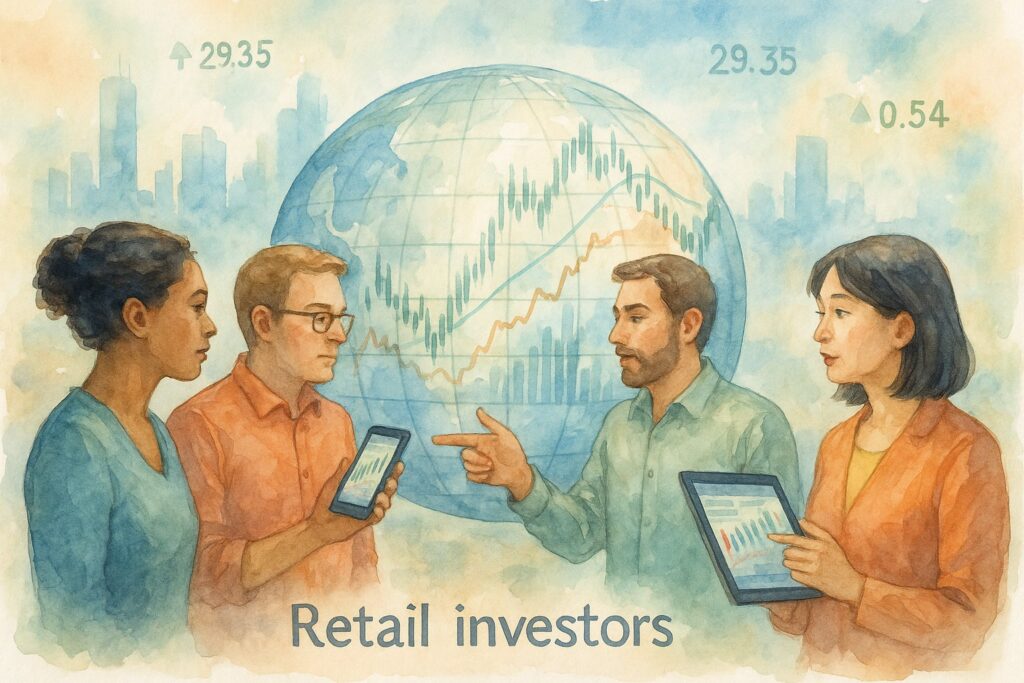
a. Access to Mature Private Assets
Retail investors can now enter private markets through secondary funds that hold diversified portfolios of mature private equity interests. These funds often provide semi-liquid features, such as quarterly redemption windows.
b. Liquidity Optionality
Some platforms offer secondary trading windows, allowing investors to sell their stakes before fund maturity—introducing a level of liquidity previously unavailable in private markets.
c. Risks and Challenges
- Valuation Uncertainty: Prices are negotiated and may not reflect real-time asset values.
- Limited Transparency: Secondary deals remain less standardized than public market trades.
- Regulatory Complexity: Retail participation is subject to suitability rules and may require accredited investor status.
d. Regulatory Momentum
Regulators in the U.S. and Europe are encouraging responsible retail access to alternatives. The SEC’s modernization of the Accredited Investor definition and the EU’s ELTIF 2.0 framework are examples of policy shifts supporting retail participation—while maintaining investor protections.
Case Studies
Case Study 1: Moonfare Secondary Market
In 2023, Moonfare launched a digital secondary market allowing investors to trade private fund interests twice a year. This innovation provided early liquidity to over 10,000 investors across Europe and Asia, with average transaction sizes under €100,000—demonstrating the feasibility of retail-scale secondaries.
Case Study 2: GP-Led Continuation Fund Example
A large private equity firm (e.g., CVC Capital Partners) structured a continuation vehicle to hold select high-performing assets nearing the end of a fund’s life. Original LPs were given the choice to sell their stakes or roll forward—a model that has become increasingly common as a liquidity solution.
Future Outlook
The secondaries market is evolving into a core liquidity infrastructure for private markets. Over the next five years, expect to see:
- Integration with wealth management ecosystems (e.g., Morgan Stanley, UBS, and BlackRock are building retail-access frameworks).
- Tokenized secondary trading for fractional fund interests on blockchain networks.
- AI-driven valuation tools improving transparency and price discovery.
- Hybrid funds combining primary and secondary strategies for diversified exposure.
Key Takeaways
- The secondaries market is now a mainstream liquidity mechanism, not just a niche solution.
- It enhances portfolio flexibility, distribution planning, and risk management for institutional and retail investors alike.
- Retail participation, while growing, requires careful due diligence and regulatory oversight.
- Technological innovation and regulatory evolution are accelerating democratization of private market liquidity.
Learn More
Healthcare practitioners interested in learning more about AltsPRISM™ can contact the investor relations desk at: support@altsprism.com or visit https://www.altsprism.com for additional information.