

Investing in interval and tender-offer funds requires careful scrutiny of specific fund details that directly impact your returns and liquidity. Understanding expense ratios, redemption schedules, NAV calculations, and the track record of fund managers is essential to making informed decisions and avoiding surprises. These factors shape how your investment performs and how easily you can access your money.
Expense ratios affect your cost of ownership, while redemption schedules determine when you can sell your shares. Knowing how the Net Asset Value (NAV) is calculated ensures transparency and fairness in pricing. Meanwhile, a fund manager’s history and oversight reveal the reliability and stability behind your investment.
Key Takeways
- Know the costs that affect your fund’s performance.
- Understand when and how you can redeem your shares.
- Evaluate the credibility and experience of the fund manager.
Understanding Expense Ratios in Interval and Tender-Offer Funds
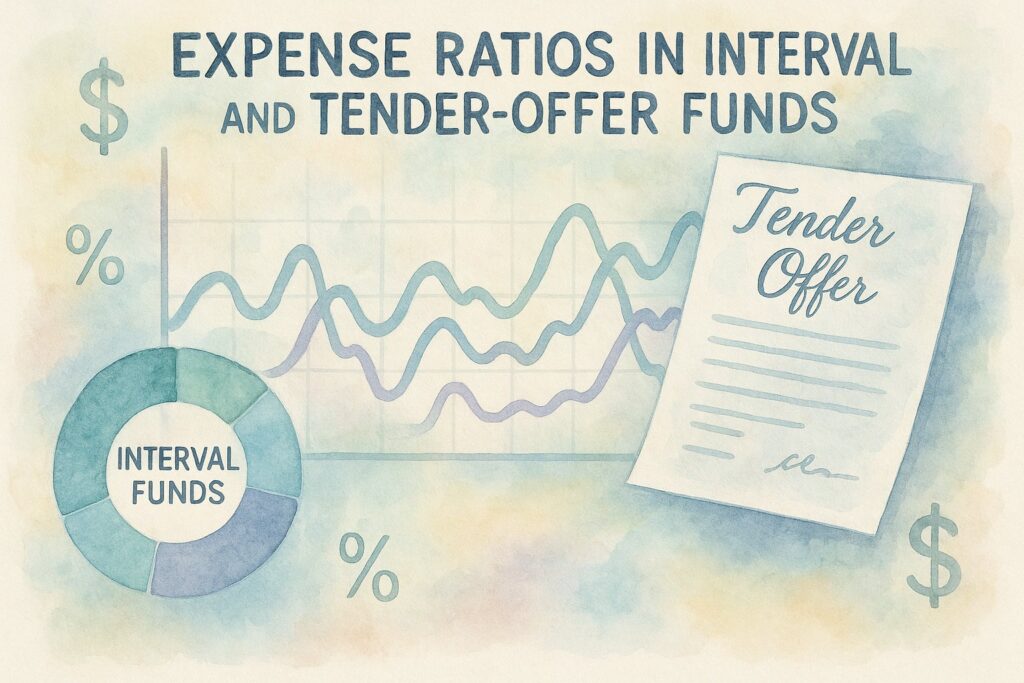
Expense ratios in interval and tender-offer funds usually run higher than those in traditional mutual funds or ETFs. You need to consider the specific components driving these costs, how these fees affect your returns, and how to benchmark them against similar funds.
Components of Expense Ratios
Expense ratios in these funds include management fees, administrative expenses, and operational costs. Additionally, acquired fund fees—fees from underlying investments held by the fund—can add to the total expense.
Some interval funds also have expense limitation agreements in the early years, which can temporarily cap costs. However, performance-based fees are more common in tender-offer funds, further increasing the expense ratio.
Understanding each cost element helps you assess how much you pay relative to the fund’s complexity and liquidity features.
Impact on Investor Returns
Higher expense ratios directly reduce your net returns over time. Since interval and tender-offer funds target less liquid or non-traditional assets, their fees reflect the costs of managing these complex strategies.
Be aware that these fees may compound, especially if the fund applies performance incentives or redemption fees. This makes it essential to factor in expenses when evaluating potential gains.
You should always weigh fee levels against expected returns and liquidity terms to determine if the fund aligns with your investment goals.
Comparing Expense Ratios Across Funds
When comparing funds, look beyond just the headline expense ratio. Compare underlying costs, fee waivers, and the structure of performance fees.
Expense ratios for tender-offer funds are often higher than for interval funds due to their different liquidity and operational models. Also, consider how fees have changed historically and whether the fund has reimbursement agreements.
Use a consistent basis for comparison, such as net expense ratios after waivers, to get an accurate picture. This helps you choose funds offering competitive fees relative to their risk and liquidity profile.
Evaluating Redemption Schedules and Liquidity
Understanding how often you can redeem shares, any restrictions on withdrawals, and how redemption terms match your investment goals is crucial. These factors affect your access to capital and the fund’s flexibility to manage liquidity.
Redemption Frequency and Terms
You should examine how often the fund allows redemptions. Interval funds typically offer quarterly redemption windows, whereas tender-offer funds may vary in frequency, including monthly or quarterly opportunities.
Check the notice period required before redeeming shares—it often ranges from 5 to 30 days. This timeline impacts how quickly you can access your money.
Also, confirm the redemption price basis. Redemptions usually occur at the fund’s net asset value (NAV) calculated on the redemption date, but some funds impose restrictions that affect timing and pricing.
Limitations on Withdrawals
Most interval and tender-offer funds impose limits on the percentage of shares redeemable in each window, often capping redemptions at 5% to 25% of the fund’s total shares outstanding. This control helps prevent liquidity strain.
You need to know if there are gate provisions that allow the fund to restrict redemptions beyond set limits during market stress. Such provisions can delay your access to funds.
Also, understand if the fund has suspension rights, which can halt redemptions temporarily during extreme situations to protect remaining investors.
Alignment with Investment Objectives
Your redemption schedule should align with your liquidity needs and investment horizon. Funds with infrequent redemption windows may suit investors with a long-term perspective comfortable with limited access to cash.
If you anticipate needing quicker liquidity, focus on funds with more frequent tender offers or shorter notice periods.
Analyze whether the fund’s redemption terms support your financial planning, especially in volatile markets where liquidity risk increases.
Net-Asset-Value (NAV) Calculation Methods & Transparency
Understanding how NAV is calculated and the transparency around this process is essential for assessing the liquidity and valuation accuracy of interval and tender-offer funds. You need to consider how often NAV is updated, the valuation approaches applied, and their impact on pricing and trading.
Frequency of NAV Calculation
NAV for interval and tender-offer funds is typically calculated less frequently than daily NAV funds. Many update NAV weekly, biweekly, or even monthly, reflecting the illiquid nature of their holdings.
Less frequent NAV calculations can affect your ability to track the fund’s real-time value. You should review the fund’s prospectus to confirm the exact schedule, as this impacts investment timing and liquidity.
Be aware that longer intervals may introduce valuation lag, which might lead to discrepancies between the stated NAV and market conditions at redemption or purchase times.
Valuation Methodologies Used
NAV calculation depends on fair value accounting principles, especially for assets without readily available market prices, like private equity or real estate. Funds often use independent third-party appraisals or internal models.
The choice between market prices, appraisals, or models directly influences NAV accuracy. You should check whether the fund discloses its valuation hierarchy and the frequency of independent reviews.
Transparency about valuation methods allows you to assess valuation risk and the reliability of the NAV in reflecting true asset values.
Effects on Pricing and Trading
NAV calculation frequency and valuation methods significantly influence fund pricing and liquidity. Delayed or estimated NAVs can cause price distortions, particularly when you trade on redemption or tender-offer windows.
You may encounter premiums or discounts relative to NAV if there is a gap between market conditions and reported NAV. This affects your cost basis and potential returns.
Understanding these effects helps you manage expectations about execution prices and redemption timing within these funds.
Assessing Fund Manager Track Record and Oversight
You need to evaluate the manager’s experience, their approach to risk, and how clearly they communicate fund performance and operations. These factors help reveal the capability and reliability of the management team overseeing your investment.
Manager Experience and Performance History
Review the manager’s tenure in managing interval or tender-offer funds specifically. Experience with other fund types may be relevant but is less critical than proven success with these structures.
Examine historical returns compared to benchmark indices and peer funds. Pay attention to consistency over different market cycles, not just top-performing years.
Look for any disciplinary actions or legal issues in the manager’s background. Transparency about past challenges and how they were handled is a positive sign.
Risk Management Practices
Understand the manager’s methods for identifying and mitigating investment risks. This includes how they handle liquidity constraints typical in interval and tender-offer funds.
Ask about limits on portfolio concentration, use of leverage, and procedures for stress testing holdings. Effective risk controls protect your capital in volatile markets.
Check if the manager has clear rules for redemption timing and gating mechanisms to manage investor exits without disrupting the fund’s stability.
Transparency in Reporting
Your ability to monitor fund performance depends on clear and frequent reporting. Evaluate the quality of quarterly and annual reports, including detailed NAV calculations and portfolio summaries.
Look for straightforward disclosure of fees, expenses, and any related-party transactions. Reports should also explain how redemption schedules are implemented.
Transparency builds trust and lets you make informed decisions based on accurate, timely information. Without it, you risk surprises in your investment experience.
Frequently Asked Questions
Understanding the calculation of Net Asset Value, expense ratios, and redemption schedules is crucial when evaluating interval and tender-offer funds. You also need to consider fund manager performance, liquidity differences, and regulatory requirements.
What methods are employed to calculate the Net Asset Value (NAV) for these funds?
NAV is typically calculated by subtracting the fund’s liabilities from its total assets, then dividing by the number of shares outstanding. This calculation often occurs on a periodic basis, such as daily or weekly, depending on fund type and policy.
How is the fund’s expense ratio determined and what impact does it have on overall returns?
The expense ratio is calculated by dividing the fund’s operating expenses by its average net assets. Higher expense ratios reduce your net returns since more of the fund’s assets are used to cover costs.
Can you explain the frequency and process for redemption schedules in interval and tender-offer funds?
Interval funds offer redemptions at set intervals, such as quarterly, while tender-offer funds provide specific windows when redemption offers are made. Both follow advance notification requirements and may use fair market value pricing.
What factors are considered when assessing the track record of a fund manager in these types of funds?
You should examine the manager’s performance over multiple market cycles, consistency in meeting objectives, risk management practices, and experience with illiquid asset types common in interval and tender-offer funds.
How do interval and tender-offer funds differ in their approaches to liquidity?
Interval funds provide liquidity at predetermined intervals directly to shareholders. Tender-offer funds rely on periodic offers to repurchase shares, often subject to limits and board approval.
What are the key regulatory compliance considerations for interval and tender-offer funds?
These funds must comply with SEC regulations, including proper disclosure of fees, redemption procedures, and maintaining required liquidity levels. Compliance also involves regular reporting and adherence to valuation standards.
Call to Action:
If you’re a healthcare professional interested in private markets, consider speaking with one of our financial advisors before you take the plunge. A personalized private markets investment strategy today can make a world of difference for your family’s tomorrow.