

Stagflation—slowed economic growth paired with persistent inflation—can quietly erode purchasing power while limiting market gains. Understanding how this environment impacts your retirement portfolio allows you to take timely, informed action instead of reacting under pressure. For healthcare practitioners relying on ETF-based strategies, the right adjustments can help preserve long-term stability.
You face a unique challenge when inflation raises living costs while investment returns stagnate. In this environment, the wrong moves can lock in losses or miss opportunities. By separating short-term defensive steps from medium-term positioning, you can better protect both income and capital.
This commentary will outline what stagflation is, how it affects the broader economy, and the specific ways it can influence retirement investments. It will also provide a clear, actionable roadmap for healthcare professionals to manage risk in ETF-based portfolios under these conditions.
Key Takeaways
- Know what stagflation is and why it matters for your finances
- Understand its potential impact on ETF-based retirement portfolios
- Apply targeted short- and medium-term strategies to manage risk
Defining U.S. Stagflation

Stagflation describes a period when economic growth slows while inflation and unemployment remain elevated. This combination makes it difficult to improve living standards or protect investment value, as traditional policy tools can worsen one problem while addressing another.
Key Economic Indicators of Stagflation
You can identify stagflation by tracking three primary indicators:
| Indicator | What to Watch | Why It Matters |
|---|---|---|
| GDP Growth | Flat or negative growth over multiple quarters | Signals economic stagnation |
| Inflation Rate | Persistent price increases above the Federal Reserve’s target | Reduces purchasing power |
| Unemployment Rate | Rising or consistently high joblessness | Limits household income and spending |
When these indicators move together in the wrong direction, it points to a stagflationary environment.
You should also monitor the Misery Index—the sum of the inflation and unemployment rates. A higher index reflects greater economic strain on households and can signal trouble for investment returns.
Market sentiment, consumer confidence surveys, and real wage trends can provide early warnings before official statistics confirm the problem.
Historical Context and Recent Trends
The U.S. experienced notable stagflation in the 1970s and early 1980s, driven by oil price shocks, wage pressures, and weak productivity growth. Inflation exceeded 10% at times, while unemployment stayed high, leading to years of economic strain.
In recent years, inflation has remained above the Federal Reserve’s 2% target, while GDP growth has slowed. Trade tariffs and supply chain disruptions have added cost pressures.
As of 2025, unemployment remains relatively low compared to past stagflation periods, but some economists warn that persistent inflation combined with slowing growth could shift conditions toward stagflation.
You can use historical patterns to understand how asset classes, such as equities and bonds, may react if the economy enters a similar phase.
Causes and Triggers
Stagflation often starts when supply-side shocks—such as energy price spikes or global supply chain breakdowns—raise production costs across industries.
Policy missteps can also play a role. For example, raising interest rates too aggressively to fight inflation can slow growth, while excessive stimulus can keep inflation high.
Other triggers include declining productivity, labor market disruptions, and geopolitical events that restrict trade or resource availability.
You should recognize that stagflation risk increases when inflation becomes embedded—meaning businesses and consumers expect prices to keep rising. This expectation can drive wage demands and further price hikes, creating a self-reinforcing cycle.
Economic Impact of Stagflation
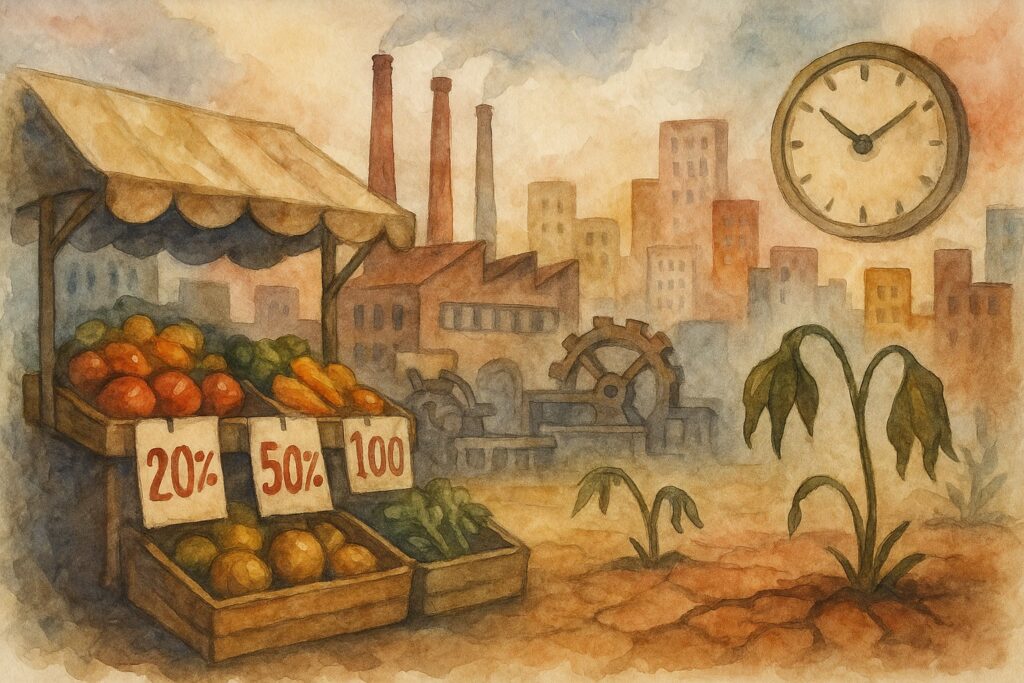
Stagflation places simultaneous pressure on economic growth, employment stability, and household budgets. It can also create uneven effects across industries, with some sectors facing sharper declines in demand or profitability than others.
Effects on Growth and Employment
During stagflation, real GDP growth slows or turns negative while job creation stalls. Businesses face higher costs from wages, materials, and financing, but weak demand limits their ability to raise output.
You may see higher unemployment rates alongside underemployment, where workers accept fewer hours or lower-paying roles. Wage growth often lags behind inflation, reducing real income.
For example, manufacturing and construction often delay new projects when borrowing costs rise. Service industries tied to discretionary spending—such as travel or dining—may reduce hiring or cut staff.
Public-sector employment can also be affected if tax revenues fall, leading to budget constraints and slower hiring. This combination of weak growth and soft labor markets makes recovery more difficult.
Influence on Inflation and Purchasing Power
Stagflation typically involves persistent inflation even when the economy is not expanding. Prices for essentials—such as food, energy, and housing—often rise faster than wages.
This erodes your purchasing power, meaning you can buy less with the same income. Fixed-income households, including retirees, feel the impact more sharply because their income does not adjust quickly to inflation.
Higher interest rates, often used to control inflation, can increase mortgage, loan, and credit card costs. At the same time, savings held in low-yield accounts lose value in real terms.
You may need to adjust spending priorities, focusing on essentials while delaying non-urgent purchases. This shift in consumer behavior can further slow economic activity.
Sector-Specific Vulnerabilities
Not all sectors experience stagflation equally. Energy producers may benefit from higher prices, while consumer discretionary sectors—such as retail, entertainment, and luxury goods—often see demand fall.
Healthcare tends to be more resilient because demand is less sensitive to economic cycles, but rising operational costs can still pressure margins.
Export-oriented industries may face reduced competitiveness if domestic inflation pushes prices above global market levels. Conversely, companies with pricing power in essential goods can maintain or grow revenues.
In capital-intensive sectors like transportation or manufacturing, higher borrowing costs can delay investment projects. This can reduce productivity gains and limit long-term growth potential.
Consequences for Retirement Investments
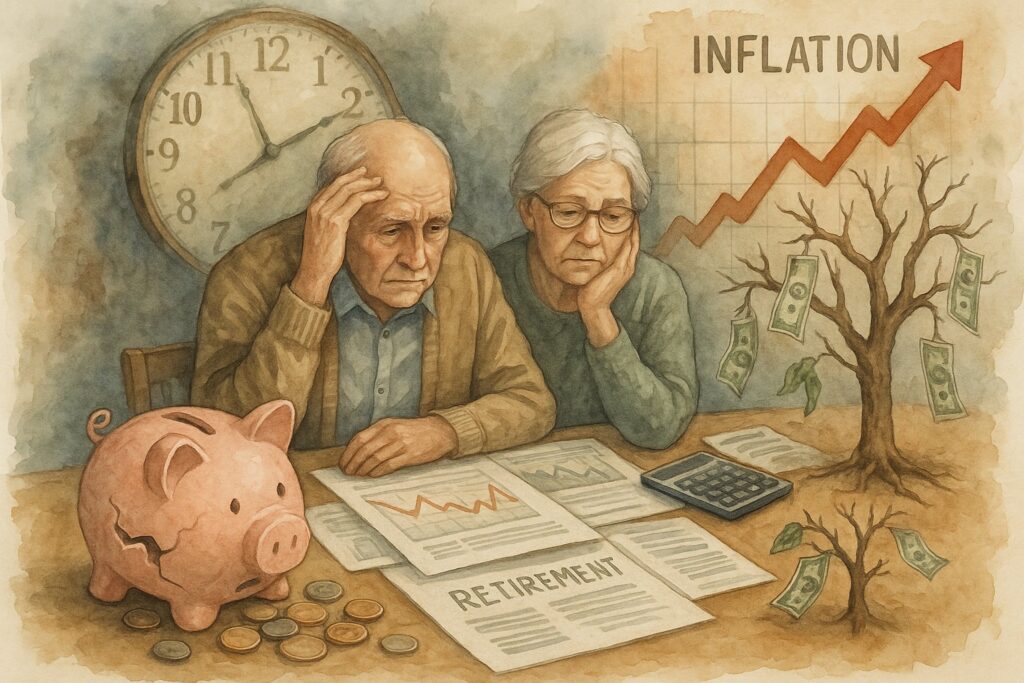
Stagflation can erode the real value of your retirement savings by combining slow economic growth, persistent inflation, and potential market volatility. Rising prices may reduce purchasing power while unstable markets can limit portfolio growth, making it harder to sustain long-term income needs.
Risks to Portfolio Performance
During stagflation, inflation-adjusted returns often decline because asset prices may stagnate while living costs rise. Even if nominal returns appear positive, higher inflation can offset gains.
You may also face greater sequence-of-returns risk if market downturns occur early in retirement, as withdrawals during low-return periods can accelerate depletion of savings.
Short-term market swings can increase emotional decision-making. Selling during downturns or chasing inflation hedges without a plan can harm your portfolio’s long-term stability.
| Risk Factor | Potential Effect |
|---|---|
| High Inflation | Reduces real returns |
| Low Growth | Limits equity appreciation |
| Volatility | Increases behavioral risk |
Challenges for Fixed-Income and Equity Holdings
Fixed-income investments, such as bonds, can lose value when inflation rises faster than interest payments. If interest rates increase to combat inflation, existing bonds with lower yields may decline in market price.
Equities can also struggle in stagflation because slower economic growth may weaken corporate earnings. Certain sectors—like consumer discretionary—often face reduced demand, while defensive sectors may hold up better but still face cost pressures.
You may need to rebalance ETF allocations to reduce overexposure to vulnerable sectors or long-duration bonds. Shorter-duration fixed income or inflation-linked securities may help preserve purchasing power without taking on excessive equity risk.
Impact on Long-Term Retirement Planning
Stagflation can shorten the time your savings will last if withdrawals are not adjusted for inflation and market conditions. Higher living costs may require you to draw more from your portfolio, increasing the risk of running out of funds.
You might need to revise withdrawal rates, delay large discretionary expenses, or extend your working years to maintain financial security.
ETF-based retirement portfolios may require periodic stress testing under stagflation scenarios. This helps you evaluate whether your current asset mix can sustain your target income when both inflation and low growth persist.
Short-Term Actions for Healthcare Practitioners
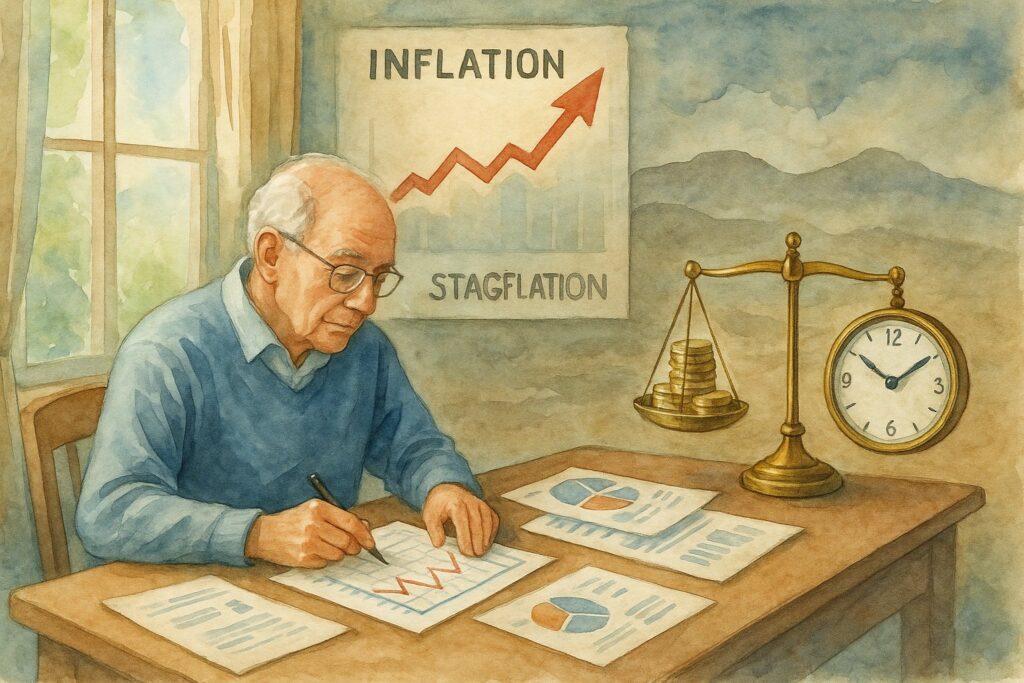
You can reduce stagflation-related risks in your retirement portfolio by identifying vulnerable assets, rebalancing ETF holdings toward resilient sectors, and maintaining enough liquidity to respond quickly to market shifts. These steps help you protect purchasing power and preserve capital in a high-inflation, low-growth environment.
Assessing Portfolio Stagflation Exposure
Start by reviewing your ETF holdings for sensitivity to inflation and economic slowdowns. Focus on sector weightings, interest rate exposure, and reliance on discretionary consumer spending.
Use performance data from past inflationary periods to identify ETFs that historically underperformed in similar conditions. Pay attention to fixed-income ETFs with long durations, as they can lose value when interest rates rise.
Create a table or checklist that categorizes ETFs into high, moderate, and low stagflation risk. This allows you to prioritize which holdings may need immediate adjustment.
Adjusting ETF Allocations
Shift allocations toward sectors that tend to perform relatively better during stagflation, such as healthcare, utilities, and consumer staples. These sectors often have stable demand regardless of economic conditions.
Consider reducing exposure to cyclical sectors like industrials and discretionary retail, which can suffer during slow growth. Commodity-linked ETFs, such as those tracking energy or precious metals, may help offset inflation pressures.
Rebalance gradually to avoid triggering unnecessary transaction costs or tax liabilities. Use limit orders to control entry and exit prices, especially in volatile markets.
Enhancing Liquidity and Risk Management
Maintain a portion of your portfolio in cash-equivalents or short-term Treasury ETFs. This provides flexibility to act on new opportunities without selling long-term investments at unfavorable prices.
Set clear stop-loss thresholds for higher-risk ETFs to limit downside exposure. Review these thresholds regularly as market conditions change.
If you hold leveraged or inverse ETFs, reassess whether their short-term trading profile aligns with your retirement objectives. In volatile stagflation conditions, these products can magnify both gains and losses, increasing portfolio risk beyond intended levels.
Medium-Term Strategies to Address Stagflation Risk
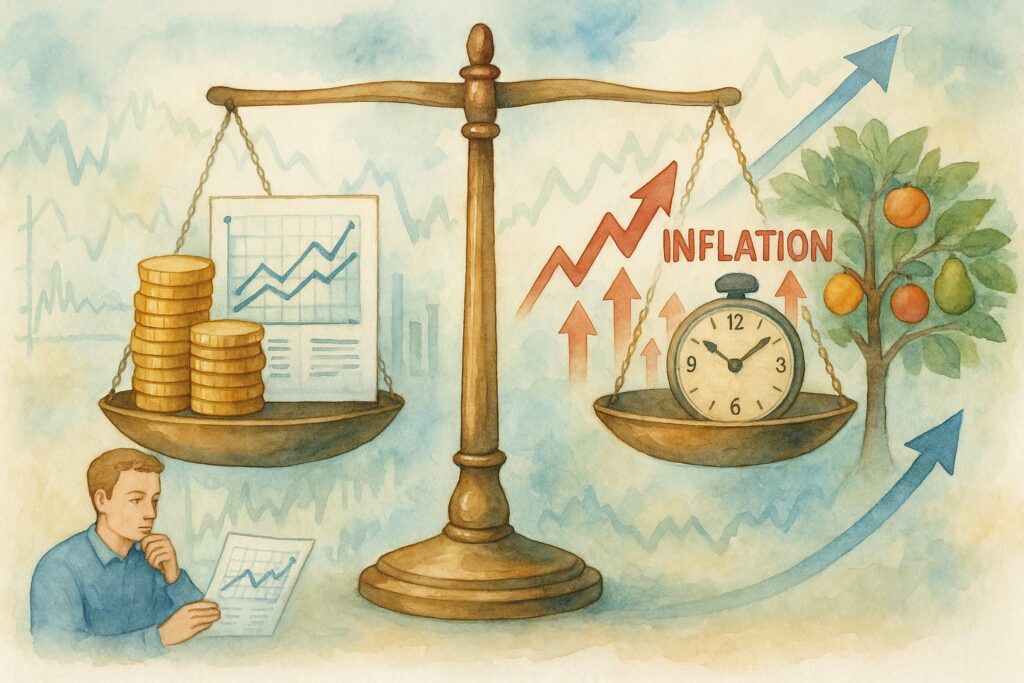
You can reduce the impact of stagflation on your retirement portfolio by adjusting asset allocation, adding inflation-resistant holdings, and maintaining disciplined portfolio oversight. These steps aim to protect purchasing power while managing volatility in both equity and fixed-income markets.
Diversification Across Asset Classes
You should avoid concentrating your portfolio in a single asset type during stagflation. Economic slowdowns can hurt equities, while inflation can erode bond values. A balanced mix helps offset losses in one area with gains in another.
Consider allocating across equities, fixed income, commodities, and real assets. For example:
| Asset Class | Potential Role in Stagflation |
|---|---|
| Equities | Growth potential, but sector-specific risk |
| Bonds | Income generation, but inflation-sensitive |
| Commodities | Inflation hedge, price volatility |
| Real Assets | Tangible value, potential income |
Within equities, you may focus on sectors with pricing power, such as healthcare or utilities. In fixed income, shorter-duration bonds can reduce interest rate risk. Commodities like energy or agricultural products may provide a buffer against rising prices.
Incorporating Inflation-Hedged ETFs
Inflation-protected securities can help preserve your portfolio’s real value. ETFs that hold Treasury Inflation-Protected Securities (TIPS) or commodity-linked assets can adjust with inflation, reducing purchasing power loss.
You might also consider ETFs tracking broad commodity indexes or real estate investment trusts (REITs), as these can benefit from rising asset prices. The key is to ensure these positions are proportionate to your overall risk tolerance.
When selecting inflation-hedged ETFs, review:
- Expense ratios to limit cost drag
- Liquidity to ensure ease of trading
- Underlying asset composition for diversification quality
Avoid overconcentration in a single inflation hedge, as performance can vary depending on the inflation source, such as supply shocks versus currency weakness.
Reviewing and Rebalancing Retirement Portfolios
During stagflation, market movements can quickly shift your portfolio away from its intended allocation. You should review holdings at least semi-annually to identify imbalances.
Rebalancing means selling overweight assets and adding to underweight positions to restore your target allocation. This helps lock in gains from outperforming assets and reinvest in undervalued areas.
Automated rebalancing tools available through some ETF platforms can simplify this process. However, manual oversight remains important, especially if certain sectors or asset classes face unique stagflation-related risks.
You should also reassess your risk profile periodically, as prolonged stagflation can alter your income needs, time horizon, and tolerance for volatility.
Frequently Asked Questions
Stagflation combines slow economic growth, high inflation, and often rising unemployment, creating challenges for both personal finances and long-term investments. Understanding the signals, impacts, and practical responses can help you make informed adjustments to your portfolio and spending strategies.
What are the primary indicators of stagflation within the U.S. economy?
You can identify stagflation through three main signs: persistently high inflation, stagnant or declining GDP growth, and rising unemployment rates.
Additional indicators include weak consumer confidence, reduced business investment, and policy constraints that limit the effectiveness of interest rate changes.
How can stagflation impact retirement investment strategies, particularly those focused on ETFs?
Stagflation can reduce real returns on fixed-income ETFs because inflation erodes purchasing power.
Equity ETFs may also face pressure if corporate earnings decline due to slower growth and higher costs. Sector-specific ETFs, such as those in energy or commodities, may perform better in inflationary conditions but carry their own risks.
What measures can healthcare practitioners implement to mitigate the risks of stagflation on their retirement portfolios?
You can diversify ETF holdings to include sectors that historically perform better during inflationary periods, such as commodities or healthcare.
Regularly rebalancing your portfolio helps maintain your risk tolerance and investment objectives. Consider increasing exposure to inflation-protected securities like TIPS ETFs.
What historical lessons can be applied to understand and counteract current stagflation risks?
The 1970s U.S. stagflation period showed that overreliance on a single asset class can increase vulnerability.
Diversification, maintaining liquidity, and avoiding excessive leverage proved effective in reducing losses during prolonged stagflation.
In what ways does stagflation affect the overall economic growth and consumer purchasing power?
High inflation reduces the value of your income and savings, making goods and services more expensive.
Slow economic growth limits job creation and wage increases, further straining household budgets and reducing discretionary spending.
What are the short-term and medium-term actions investors can take to protect their portfolios against stagflation?
Short-term: Increase cash reserves, review expense budgets, and add inflation-resistant assets like commodity ETFs.
Medium-term: Adjust asset allocation toward sectors with stable demand, maintain a mix of growth and defensive ETFs, and monitor economic indicators to time rebalancing decisions.